


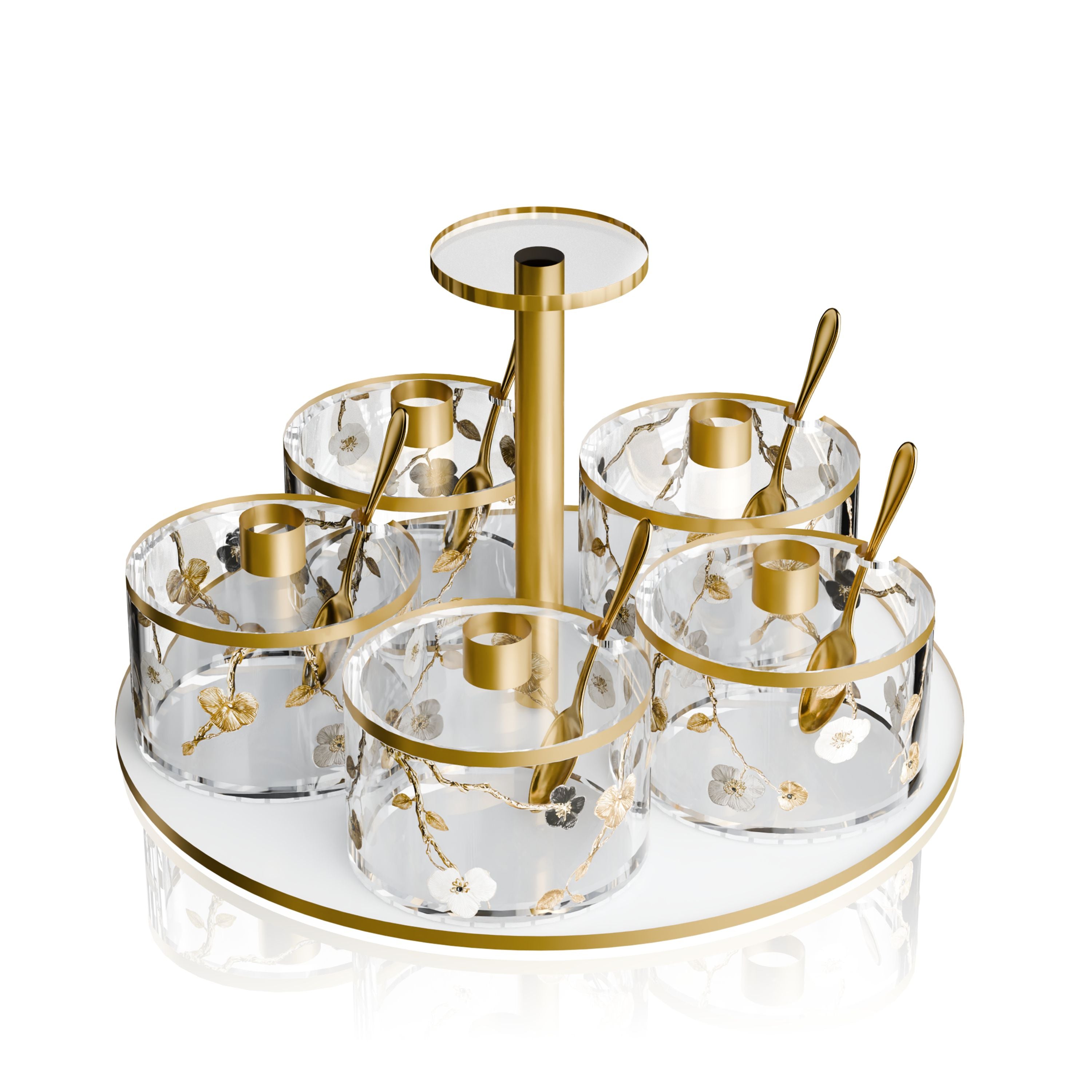
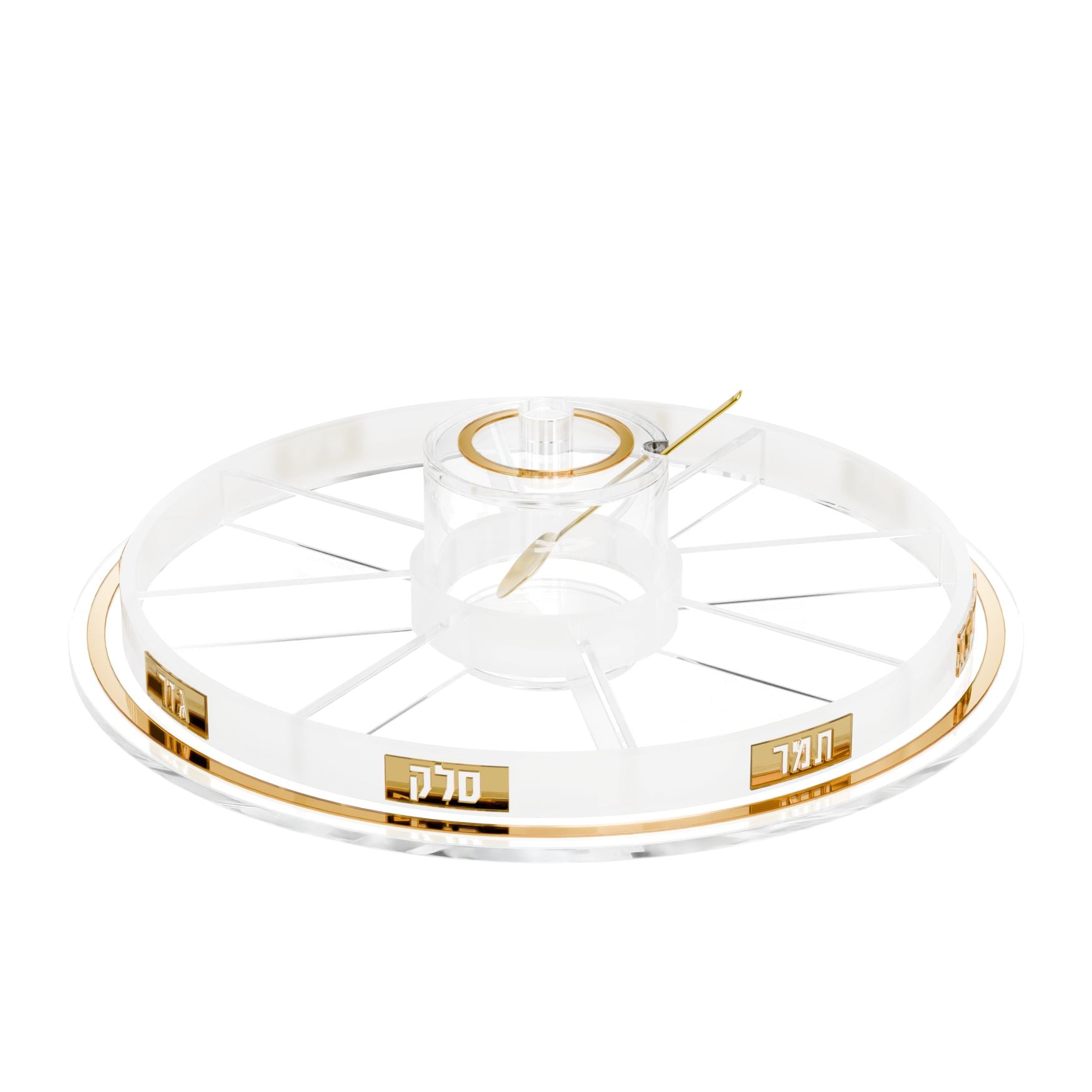
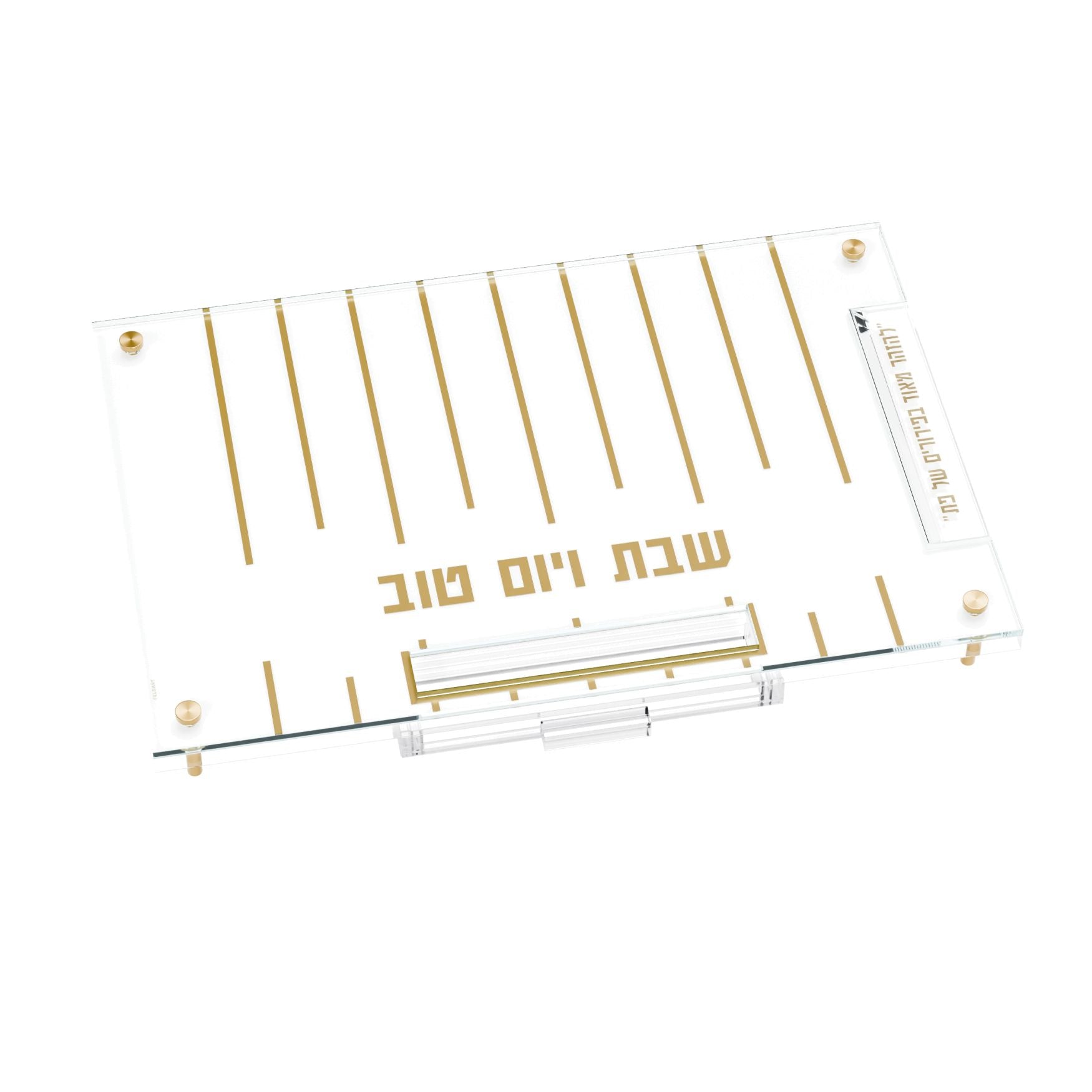




A lucite cutlery holder keeps extra forks, knives, and spoons neatly arranged and within reach. Whether you are setting a Shabbos table, hosting a Yom Tov meal, or preparing a buffet, the right holder can make serving easier while complementing your table.
Swivel and fixed holders each have their advantages. The best choice depends on where you plan to place the holder, how much space you have, and how guests will reach the cutlery.
Swivel vs Fixed Cutlery Holders
A swivel holder has a moving design that makes it easier to access the cutlery from different positions. A fixed holder keeps its compartments in one arrangement, offering a straightforward setup for a table, counter, or buffet.
|
Feature |
Swivel cutlery holder |
Fixed cutlery holder |
|
Access |
Can be repositioned to bring cutlery within reach |
Cutlery stays in a fixed arrangement |
|
Placement |
Useful where guests approach from different sides |
Useful at a designated serving station |
|
Space |
Check dimensions and allow room for movement |
Check that the footprint fits the available space |
|
Design |
Adds flexibility to the arrangement |
Offers a simple, consistent layout |
Either style can work on a Shabbos table. If the center is already occupied by serving dishes and a centerpiece, a separate cutlery station on a sideboard may be more convenient.
Choose the Compartments You Will Use
Start with the utensils you regularly put out. Forks, knives, soup spoons, and teaspoons may each need their own compartment, depending on your menu.
Consider both the number of compartments and their capacity. A holder with several small sections may suit a family meal, while a larger gathering may require more room for each type of utensil.
Check that the compartments are suitable for your cutlery. Handles should be easy to grasp, and utensils should sit securely without overcrowding.
For disposable cutlery, the same approach applies: separate each type so guests can find what they need quickly.
Set Up an Accessible Cutlery Station
Place the holder where guests can reach it comfortably without leaning across food or serving dishes.
For a buffet, position it near the plates and napkins so guests can collect everything before serving themselves. On a sideboard, leave enough room around the holder for someone to remove utensils easily.
At the dining table, a holder can keep spare cutlery available between courses. It is especially helpful when guests may need a fresh fork or spoon without interrupting the meal.
Keep the holder for clean utensils and use a separate place for used cutlery.
When to Add a Cup Stacker
If you use disposable cups, a cup stacker can keep them upright and organized alongside the cutlery.
A single stacker suits one cup size. A double stacker may be useful if you offer two sizes, such as cups for cold drinks and smaller cups for another serving area.
Before ordering, check compatibility with the cups you use. Coordinating the finish with your cutlery holder can help the station look cohesive.
Explore Feldart’s cutlery and cup holders to compare the available styles.
Consider a Combined Cutlery and Bencher Set
Some Feldart designs combine a cutlery holder with salt holders and a bencher set. This can be a convenient option if you prefer several table essentials arranged together.
Check the product description to see exactly what is included, and consider whether the complete piece will fit comfortably among your serving dishes.
If you are choosing a set with benchers, our guide to choosing a zemiros set explains what to consider when comparing nusach, readability, and set size.
Caring for Lucite
Gentle handling helps preserve lucite’s clear appearance.
- Place cutlery into the compartments carefully rather than dropping it.
- Wash by hand with mild soap, lukewarm water, and a soft cloth.
- Avoid abrasive pads and harsh cleaners.
- Dry gently before putting the holder away.
- Follow any care instructions supplied with the product.
Frequently Asked Questions
What is a cutlery holder also called?
You may see it described as a cutlery stand, cutlery caddy, flatware holder, or silverware caddy. These terms generally refer to an organizer that separates utensils into compartments.
Is a swivel holder better than a fixed holder?
It depends on your setup. A swivel design can make access more convenient from different sides, while a fixed holder works well where guests approach from one direction.
Can I use a lucite holder for disposable cutlery?
Yes, provided the compartments suit the size and quantity of utensils. Separating forks, knives, and spoons keeps the serving area tidy and easy to use.
Can lucite cutlery holders go in the dishwasher?
Wash lucite by hand unless the manufacturer specifically states otherwise. Follow the care instructions for your chosen holder.
Find a Holder for Your Table
Browse Feldart’s cutlery and cup holder collection to find a design that suits your serving space and table style. For help choosing, message us on WhatsApp at 718-569-7045.
