

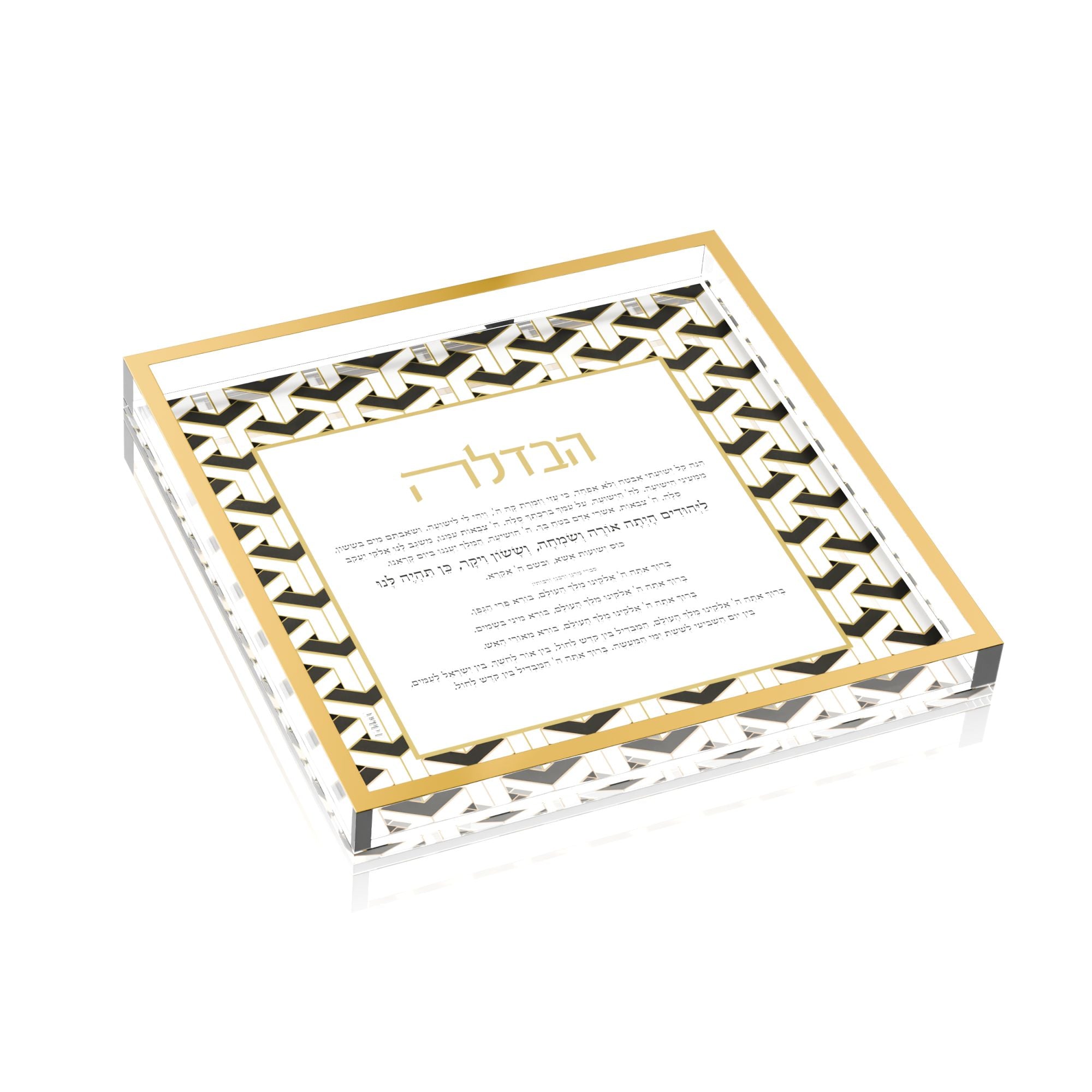
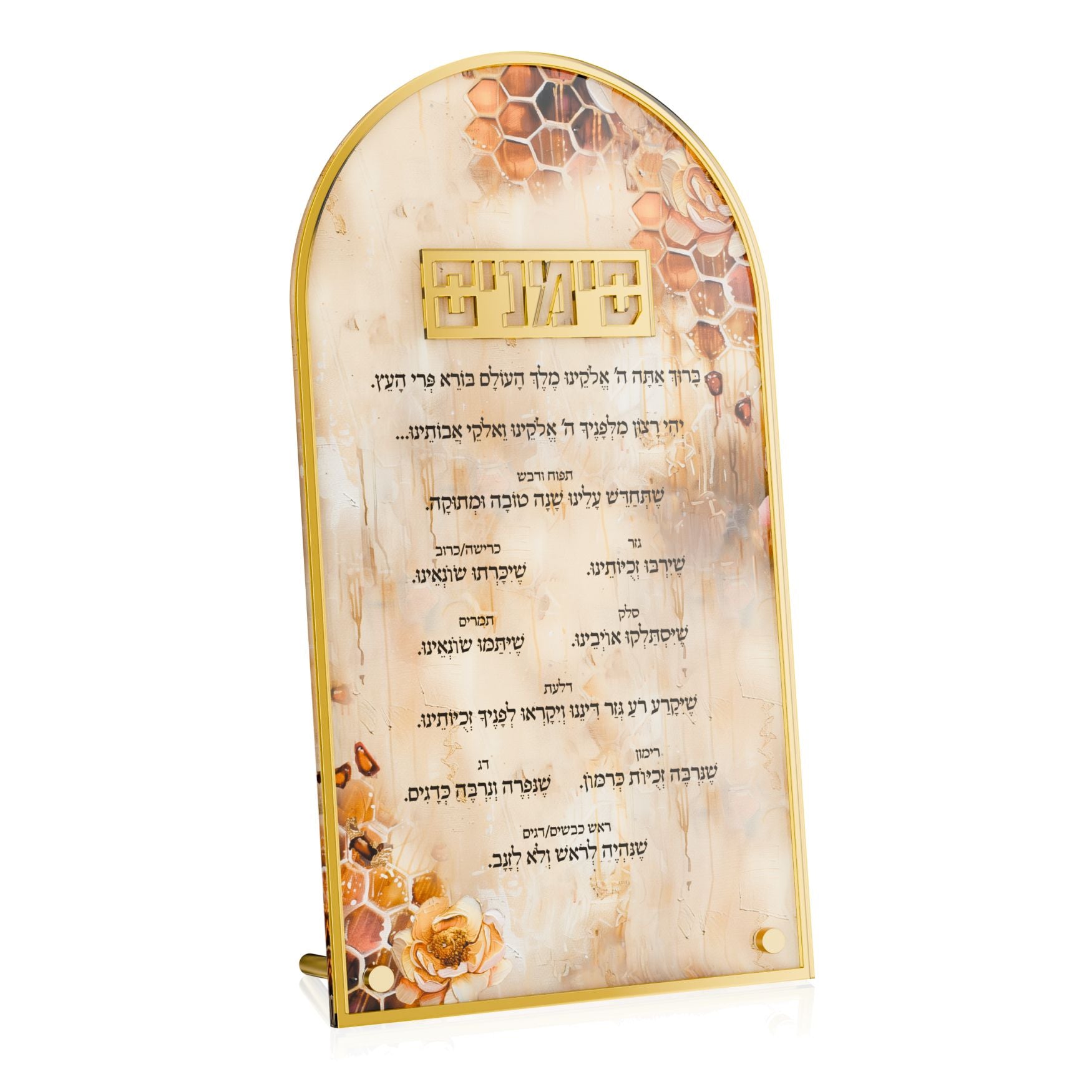
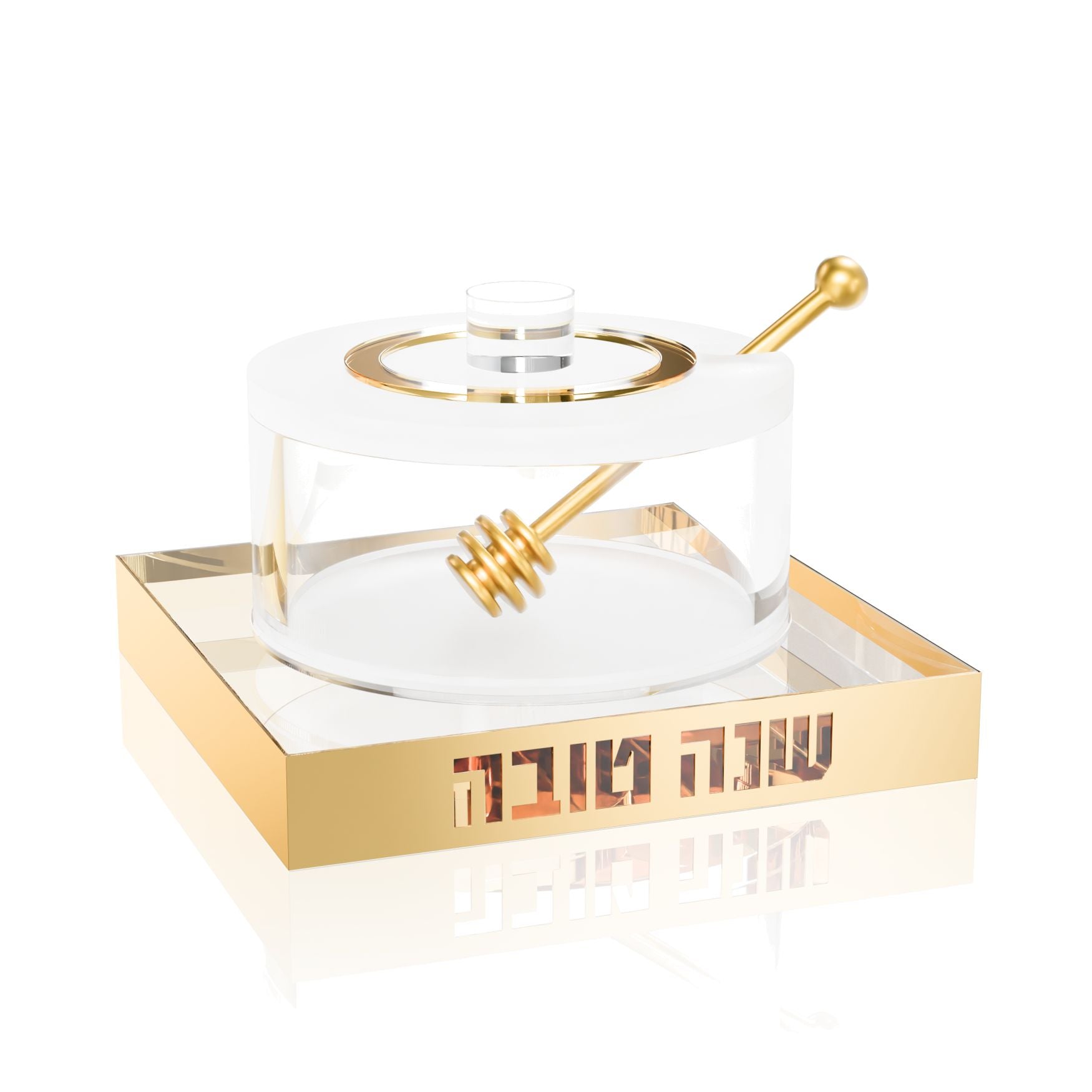
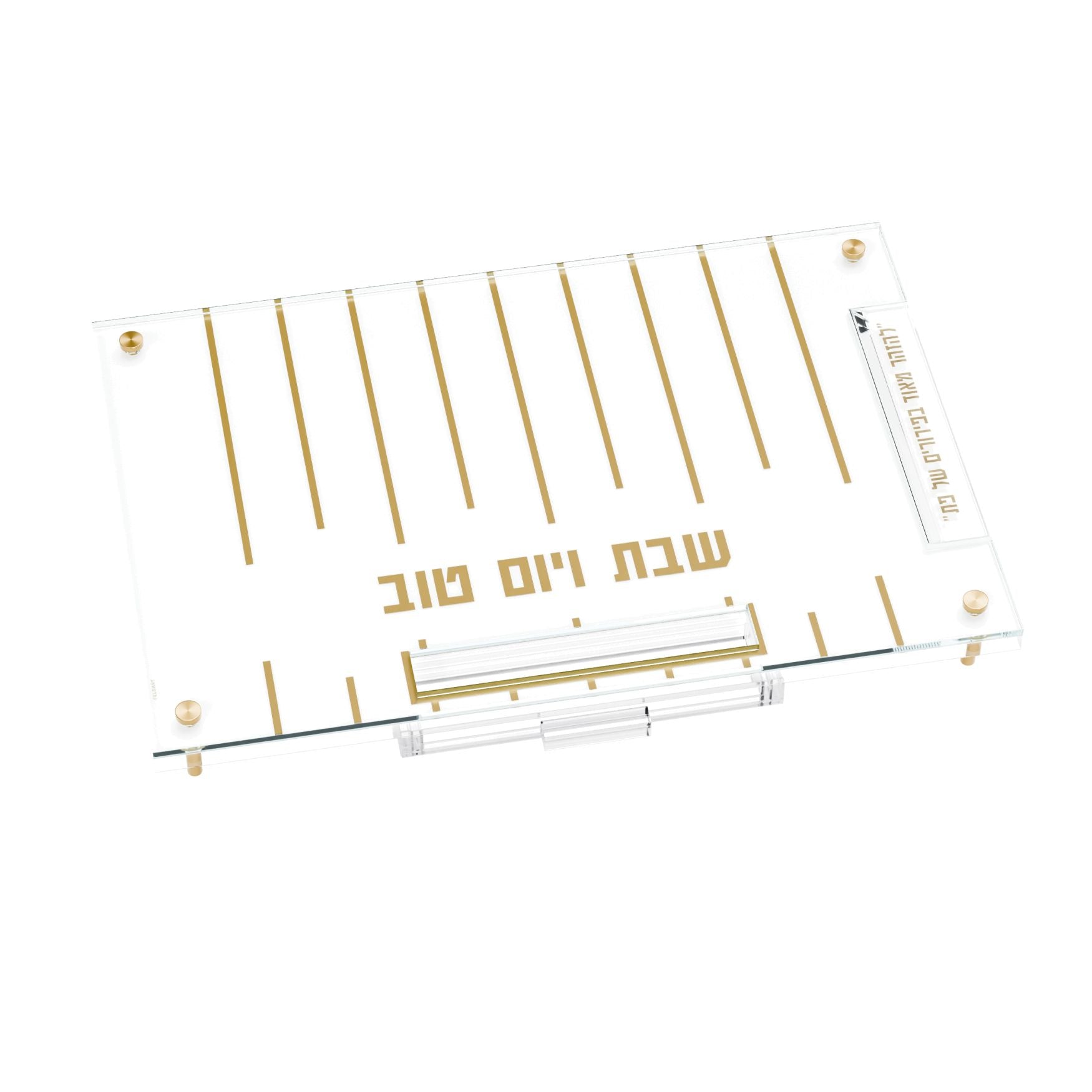

The Rosh Hashanah simanim are symbolic foods eaten on the first night, each with a short yehi ratzon asking for a good year. A simanim tray and matching cards keep them organized, keep the order clear, and keep the seder moving without a scramble.
Whether this is your first time leading the simanim or your fiftieth, the right serveware turns a lovely custom into a smooth, beautiful part of the night. This guide covers what the simanim are, the order to serve them, and how to set them up. Browse simanim trays and cards or the full Rosh Hashanah collection as you plan.
What Are the Simanim?
After the blessing over apple and honey, many families continue with a series of simanim, foods whose names or qualities hint at blessings for the year ahead. The custom has Talmudic roots and is especially strong in Sephardic and Mizrahi communities, though it is widely kept across the Jewish world. Each food is eaten with a short prayer, a yehi ratzon.
The Common Simanim and What They Mean
|
Siman |
Symbolism |
|---|---|
|
Apple in honey |
A sweet new year |
|
Pomegranate |
Merits as numerous as its seeds |
|
Dates (tamar) |
That enemies and ill will be ended |
|
Leek or cabbage (karti) |
That those who wish us harm be removed |
|
Beets (silka) |
That adversaries depart |
|
Gourd or squash (kra) |
That our merits be proclaimed |
|
Fish head or ram's head |
That we be a head and not a tail |
|
Black-eyed peas (rubia) |
That our merits increase |
Customs vary by family and community, so the exact list and wording differ. A good simanim card set spells out the foods and the yehi ratzon so every guest can follow along.
The Order to Serve Them
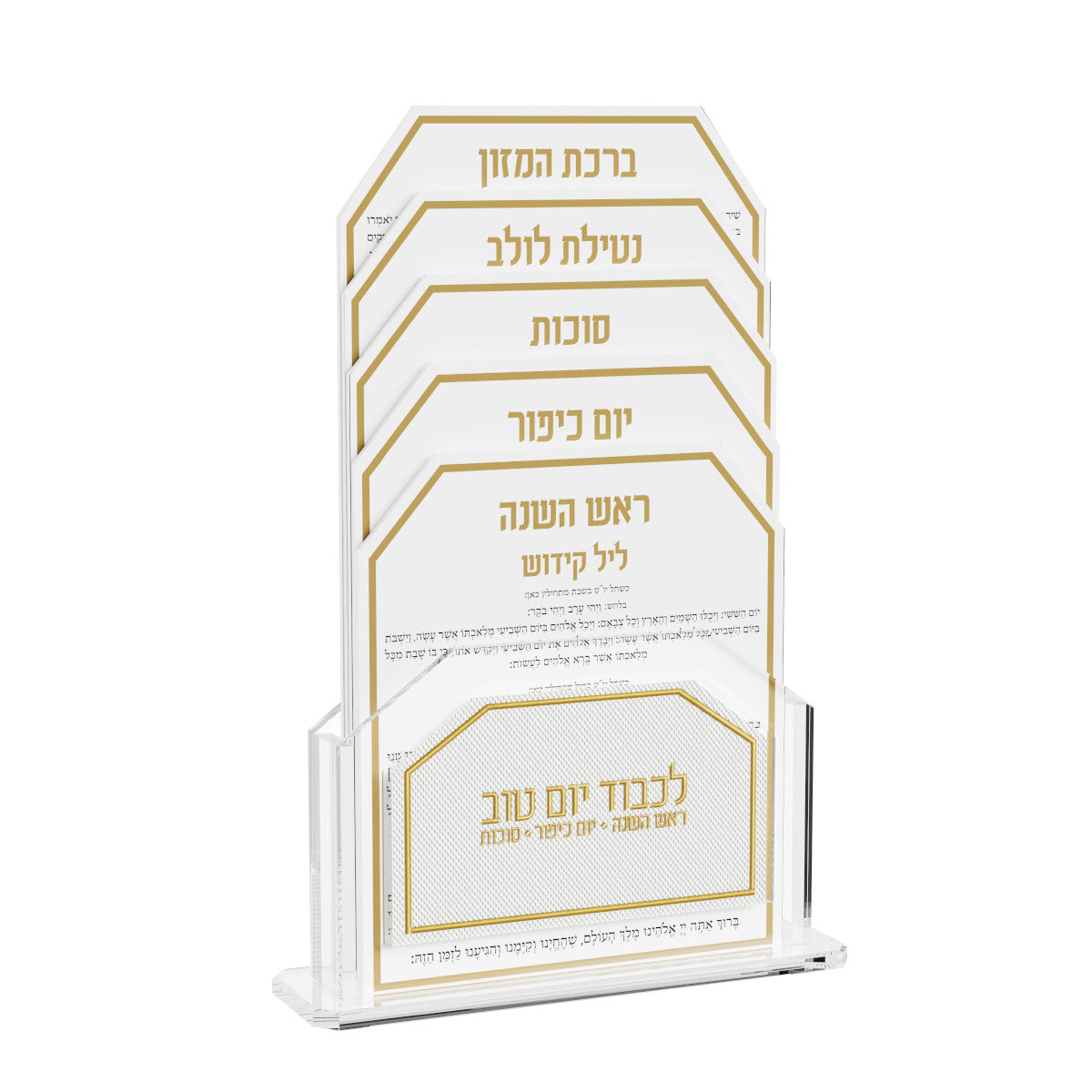
The seder usually begins with kiddush and hamotzi, then apple in honey, and then the remaining simanim. Following the order printed on a card keeps everyone together and avoids the pause while someone looks up the next blessing.
- Kiddush and hamotzi to begin the meal.
- Apple dipped in honey, with its blessing.
- The remaining simanim in your family's order, each with its yehi ratzon.
- Continue into the festive meal.
Keep the seder movingA matching tray and card set makes the simanim effortless. Shop simanim trays and cards or message us at 718-569-7045 for help building a set. |
Do You Need a Simanim Tray?
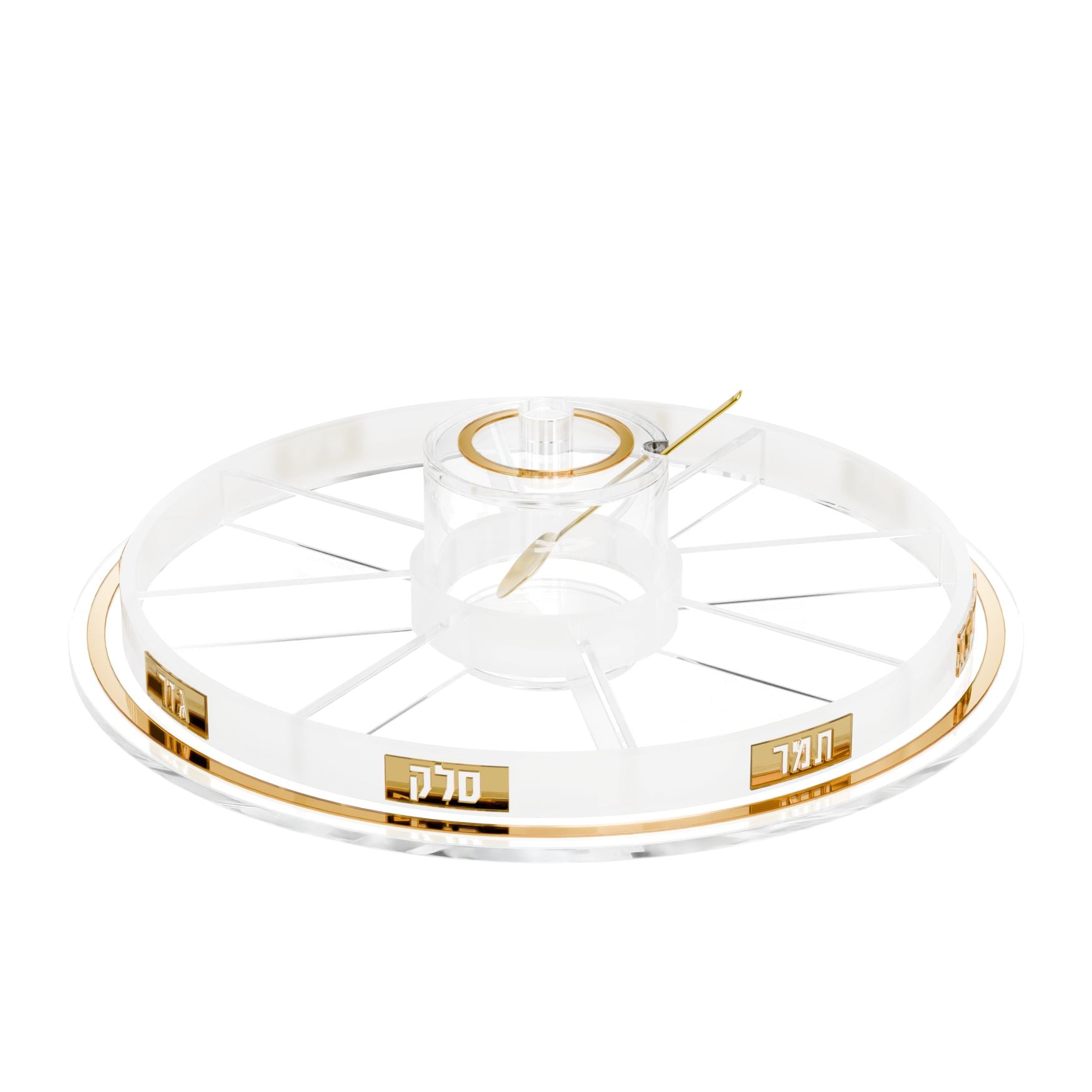
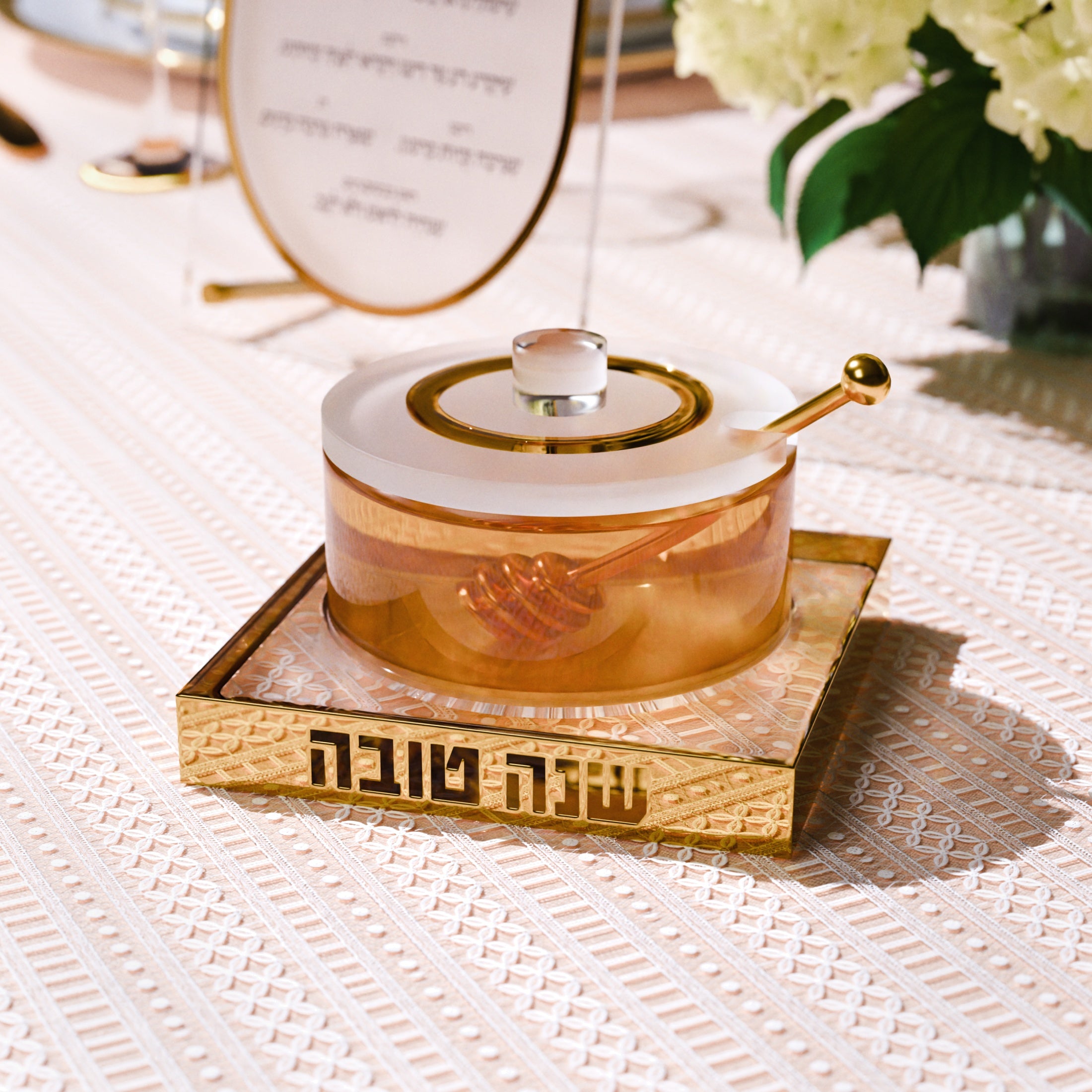
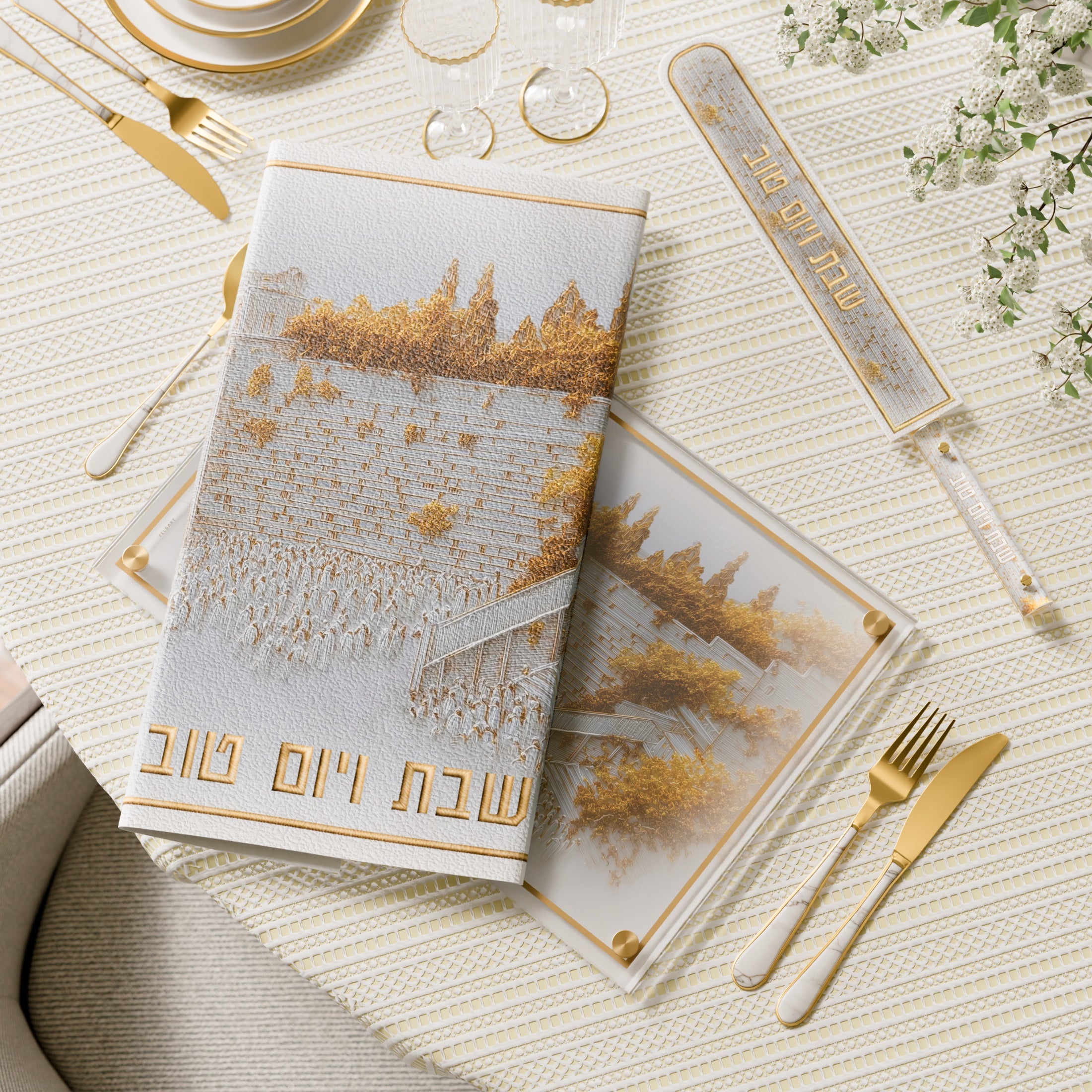
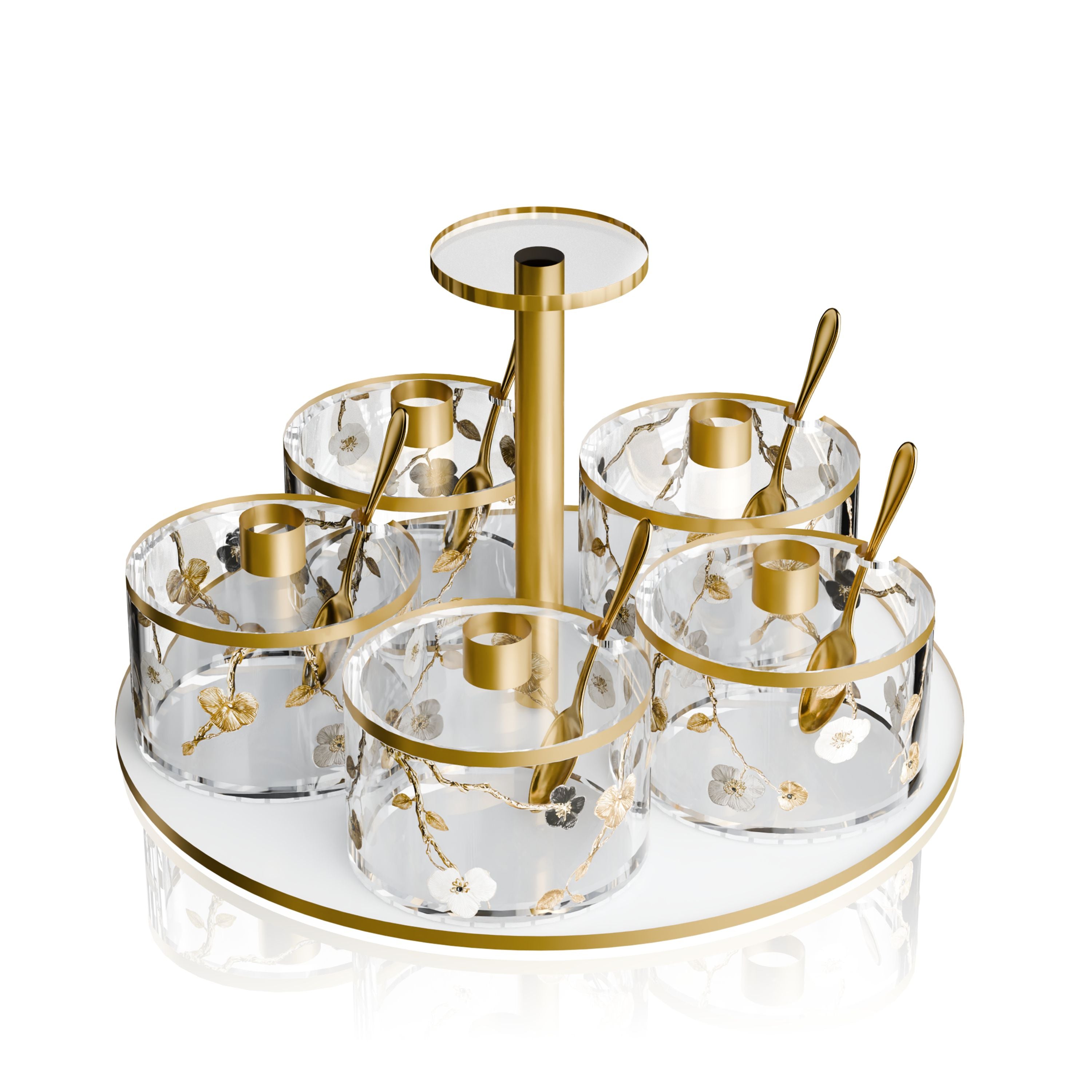
You can serve the simanim in small bowls, but a dedicated tray solves three real problems at once: it keeps the foods from crowding the table, it puts them in a clear order, and it looks intentional. Feldart trays come in coordinated lines so they match your honey dish and napkin rings.
- Lucent Simanim Tray, $85, and Blush Nectar Simanim Tray, $88. Elegant trays with wells that hold each siman neatly.
- Swivel Honeycomb Simanim Tray, $85. A rotating tray so guests can reach each food without reaching across the table.
- Apple Simanim Block, $60. A compact, sculptural option for smaller tables.
Simanim Cards: The Detail That Makes It Easy
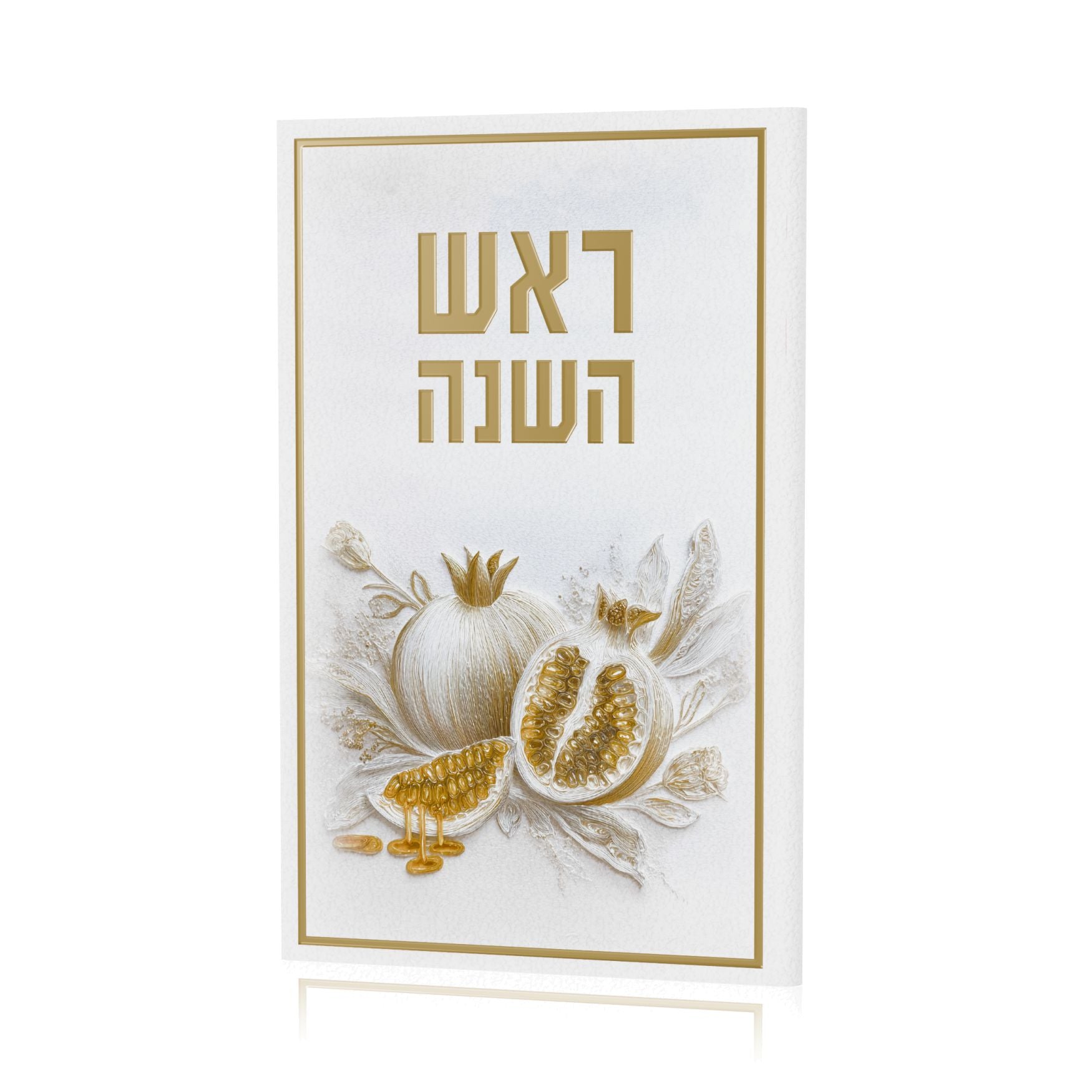
Cards are the least expensive piece and often the most useful. They put the food and its blessing in front of every guest, so children and first time guests can join in. Options run from $16 to $38.
- Lucent and Blush Nectar Simanim Cards, $16. Clean designs that match the trays above.
- Apple Pomegranate and Artscroll Modern Pomegranate cards, $20. Seasonal motifs for a festive look.
- Luxury Classic Apple Simanim Card, $38. A premium card for a formal setting.
Serving Simanim With Kids at the Table
The simanim are a wonderful way to involve children. Give each child their own card, let them announce a siman, and keep a personal honey dish within reach so little hands are not passing sticky spoons. A clear tray with wells also helps children see which food comes next.
Make It Easy: Prepare Ahead
Wash and set out your tray, cards, and napkin rings the day before. Prep the simanim foods in the afternoon and arrange them just before candle lighting. With the serveware ready and the order printed on cards, the seder runs itself.
Frequently Asked Questions
What are the Rosh Hashanah simanim?
The simanim are symbolic foods eaten on the first night of Rosh Hashanah, each with a short prayer, a yehi ratzon, asking for a good year. Common ones include apple in honey, pomegranate, dates, leek, beets, gourd, a fish or ram's head, and black-eyed peas.
What order do you eat the simanim in?
Most families begin with kiddush and hamotzi, then apple in honey, then the remaining simanim, each with its blessing. The exact order varies by family and community, which is why a simanim card that prints the order is so helpful.
Do I need a simanim tray?
You can use small bowls, but a simanim tray keeps the foods organized, in order, and looking intentional. Feldart trays run about $85 to $90 and come in lines that match your honey dish and napkin rings.
What are simanim cards for?
Simanim cards put each food and its yehi ratzon in front of every guest so children and first time guests can follow along. They cost about $16 to $38 and are the easiest way to keep the seder moving.
Are the simanim only a Sephardic custom?
The custom has especially strong roots in Sephardic and Mizrahi communities, but it is widely kept across the Jewish world. Families follow their own minhag for which foods and blessings to include.
Set a beautiful simanim tableShop simanim trays and cards, coordinate with honey dishes and napkin rings, or message us at 718-569-7045. |
